Insulated Garden Rooms: What Makes a Garden Room Warm All Year

Insulated garden rooms are garden rooms built to be used in every month of the year, with insulation in the floor, the walls and the roof, glazing that holds heat in, and a heating system sized for the room. Almost every garden room on the market is described as insulated, and the description covers everything from a thin board in the wall panels to a building specified like a house. The difference decides whether the room is comfortable in January or a place you visit in May. This is what to look for.
What does an insulated garden room actually include?
Insulation is only useful when it is continuous. A room with insulated walls and an uninsulated floor loses heat through the floor; a room with an insulated roof and single glazing loses it through the glass. A properly insulated garden room deals with all five routes heat can leave by.
The floor sits on a base and either has insulation laid over the slab under the finished floor or an insulated suspended floor. Ground is cold all year, and an uninsulated floor is the most common reason a garden room feels chilly underfoot.
The walls carry insulation between the frame members, with a vapour control layer on the warm side and a breathable membrane on the cold side, so the wall stays dry. On our hardwood garden rooms the solid walls take the insulation and the glazed walls take the glass, which is how a mostly glazed room stays warm.
The roof is where the most heat leaves, because warm air rises. A flat or low-pitched roof needs insulation above or between the joists, with a membrane over it and ventilation to stop condensation.
The glazing must be double glazed at least, with a low-emissivity coating that reflects heat back into the room. Full-height glass on the garden faces is what makes the room, and modern sealed units mean it does not have to make the room cold.
Air tightness is the fifth route. Draughts around doors, windows and where the walls meet the roof lose more heat than people expect. A room built as a building, with sealed junctions, holds its temperature; a room assembled from panels often does not.
How does a garden room stay comfortable through winter?
Insulation slows heat loss; it does not make heat. A year-round garden room needs a heat source, and in an insulated room that source can be small.
Underfloor heating, electric or wet, is the quietest and takes no wall space, and it works well under a stone, tile or engineered timber floor. A slim electric panel radiator on a solid wall is the simpler option in a small room. In a larger room used as a lounge, a wood burner is the option most people ask for; a solid-fuel stove needs building regulations compliance under Part J (flue, hearth, ventilation and a carbon monoxide alarm), so use a HETAS-registered installer.
A well-insulated hardwood room of 15 to 20 square metres will hold a comfortable temperature on a heat input that would not warm a conservatory. That is the practical test of insulation: how little heating the room needs.
How does an insulated garden room stay cool in summer?
The same insulation that keeps heat in during winter keeps it out during summer, but glass works the other way. A fully glazed south or west face will overheat a sealed room on a July afternoon unless the glazing and ventilation are designed for it.
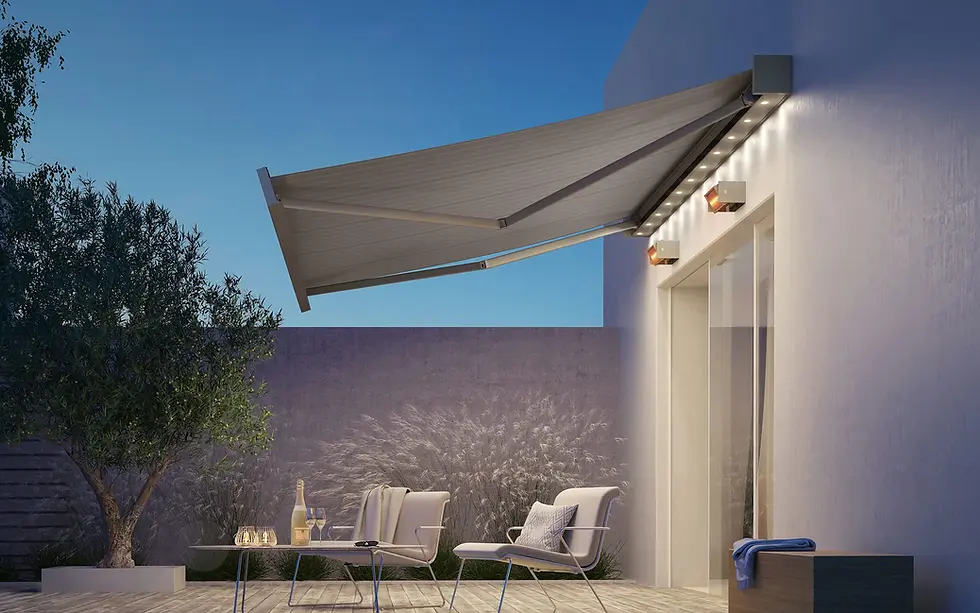
Solar control glass on the sun-facing faces reflects a share of the heat before it enters. Opening rooflights or a lantern with motorised vents let warm air out of the top of the room while open doors bring cooler air in at the bottom. External shading, whether a canopy, an awning or planting, keeps the sun off the glass altogether. Orientation does the rest: a room that faces north or east needs none of this.
How are insulated garden rooms built?
There are three common ways to build the solid walls, and each insulates differently.
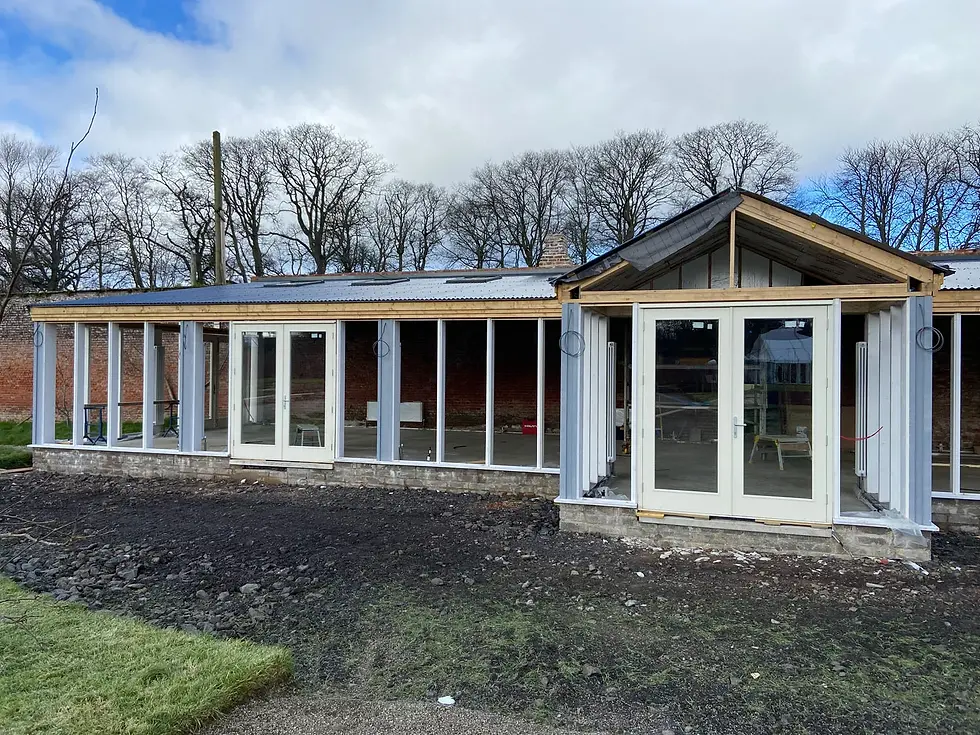
Timber frame. Insulation sits between the studs, with a vapour control layer inside and a breathable membrane outside. It is the most adaptable method, suits a hardwood-framed glazed room and lets services run inside the wall.
Structural insulated panels (SIPs). Factory-made panels with an insulating core bonded between two boards. They go up quickly and are consistent, but the panel sizes shape the design and later alterations are harder.
Masonry. Block walls with cavity or external insulation. Very durable and good at holding heat, but slower and heavier, with deeper foundations.
Whichever method is used, ask how the floor, wall and roof insulation meet, because the junctions are where most rooms leak heat.
Insulated garden rooms and building regulations
Most garden rooms in England are exempt from building regulations below 30 square metres, subject to their distance from the boundary and materials, and a room with sleeping accommodation is never exempt. Our guide to garden room planning permission sets out the building regulations thresholds and the planning limits.
What to check before you buy an insulated garden room
The word insulated on a brochure tells you nothing. Ask these instead.
What is in the floor, the walls and the roof, and how thick is it? A supplier who can answer with a material and a thickness has specified it.
What glazing is fitted? Double glazed with a low-emissivity coating is the minimum for year-round use.
How are the junctions sealed? Draughts at the eaves and around the doors undo the insulation.
What heating is included or designed in, and what does it cost to run?
Is there a vapour control layer, and is the roof ventilated? Without both, insulation gets damp and stops working.
Is the base insulated, or is the room sitting on a cold slab?
A luxury garden room will answer all six as a matter of course. A kit room may answer two.
Insulated garden rooms questions, answered
How thick should garden room insulation be?
It depends on the material, because some insulate far better per millimetre than others. Year-round garden rooms typically use rigid insulation boards of around 100 millimetres or more in the walls and more in the roof, but compare quotes on the thermal performance each gives, not the thickness alone.
Can an insulated garden room be used as a bedroom?
Not under permitted development. A garden room used for sleeping needs planning permission and full building regulations approval.
Talk to our design team
An insulated garden room is worth having only if it is insulated all the way round, and that is a question of how it is built rather than what it is called. If you would like a room that is warm in January, we are happy to talk through your garden and explain how ours are built.