Orangery Roofs and Features: Styles and Options Explained
Updated: Oct 6
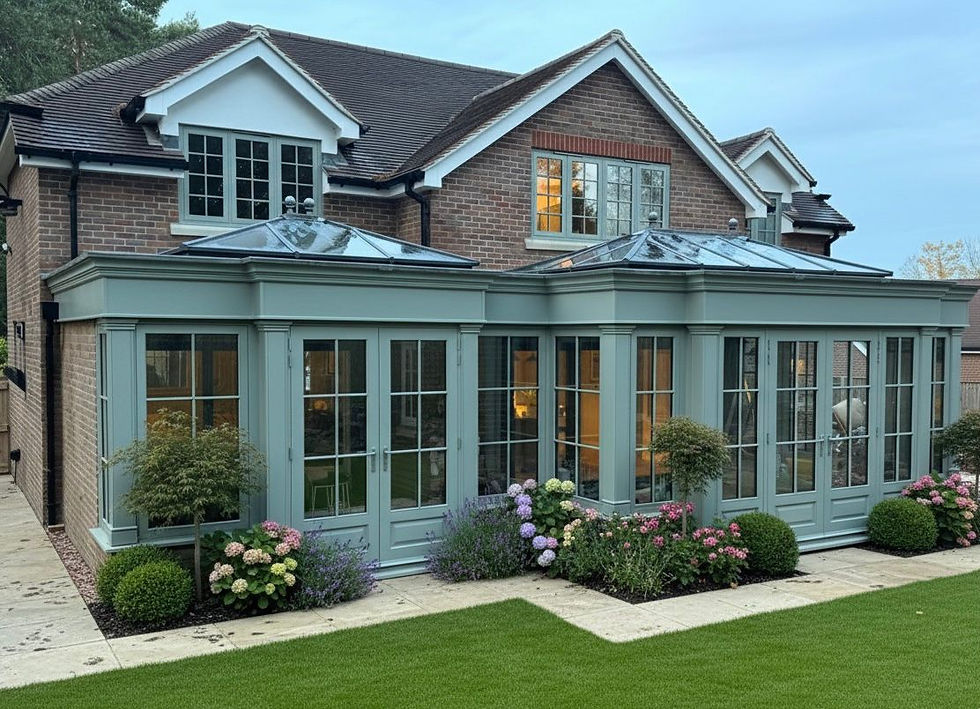
An orangery roof is a solid, insulated flat roof with a glazed lantern set into it, finished at the edge with a deep fascia. That classic form is what makes an orangery rather than a conservatory. The alternatives are a double lantern, a flat roof with rooflights and a shallow pitched roof with a lantern insert, and each changes the light, the look and the comfort of the room.
Orangery roof types compared
Flat roof with a single lantern: the classic orangery. Light from above and from the lantern's sides, a warm plastered perimeter, a moderate rise in height. Usually the most cost-efficient roof.
Double lantern: two lanterns in one flat roof for wide, open-plan rooms. Even light at both ends and two ceiling zones, at the cost of more structure.
Flat roof with rooflights: the lowest profile and the cleanest modern line, with light placed exactly where it is wanted, but top light only.
Shallow pitched roof with a lantern insert: tiled or slated to match a pitched house, with more presence outside and a little more height.
Fully glazed roof: the most light and the least warmth. At this point the room is a conservatory, not an orangery.
What makes an orangery roof different from a conservatory roof?
A conservatory roof is glass, or polycarbonate, from eaves to ridge, carried on a frame. An orangery roof is mostly solid. The perimeter is a proper insulated roof deck, plastered underneath, with the glazing concentrated in a lantern or in rooflights over the centre of the room. The solid perimeter holds the temperature and carries a moulded fascia outside; the lantern keeps it bright.
Lantern roofs
The lantern roof is the orangery signature. It is a raised, glazed structure, usually hipped at both ends, that sits over an opening in the flat roof and lights the room from above and from the sides.
Lanterns are built in hardwood, in slim thermally broken aluminium, or in aluminium with a hardwood lining inside. Hardwood suits period homes; aluminium gives the slimmest bars on large spans. The glass suits its position: low-emissivity as standard, solar control on south- and west-facing roofs, low-iron for clarity, and a self-cleaning coating if you want less upkeep. Our roof lanterns are made to the opening, which is why the proportions look right. Sizing, glazing and ventilation are covered in our guide to the orangery roof lantern.
As a rule of thumb, a lantern's glazed area is about a quarter to a third of the ceiling it sits in, adjusted for orientation and room use. Our guide to roof lantern sizes explains how to size one for your room.
Double lantern roofs
In a larger orangery, particularly one spanning the full width of the house, one lantern can leave the ends of the room dim. Two lanterns in the same flat roof balance the light across the space and create two distinct ceiling zones beneath them. It suits an open-plan orangery with a kitchen at one end and a sitting or dining area at the other. It needs more structure between the openings, so plan it early.
Flat roofs with rooflights
Some homeowners prefer a flat roof with several flat rooflights instead of one lantern. It gives a cleaner, more contemporary line and puts the light where it is wanted, over a table or an island. Rooflights also suit a roof that must stay very low, because they add almost no height.
The trade-off is side light: a flat rooflight glazes only the top, so it takes more glass to match a lantern for brightness. Traditional homes usually look better with a lantern, and fitting a roof lantern on a flat roof is a well-established detail.
Pitched orangery roofs
A pitched orangery roof is less common, but where the house has a strong pitched roof and gable ends, a matching pitch can sit against it more naturally than a flat roof. The pitch can be tiled or slated to match the house, with a lantern insert or glazed panels to bring in light. Where height or the proportions of the house call for it, a shallow pitch with a lantern insert keeps the orangery's warm, plastered ceiling while giving the roof more presence outside. Glaze the whole pitch and it is really a conservatory rather than an orangery.

A pitched roof adds height, so it needs checking against planning limits and against first-floor windows early in the design.
Fascia details
The fascia is the deep horizontal band that finishes the roof edge and hides the roof build-up behind it. On a traditional orangery it is moulded, with a cornice above and sometimes a dentil course beneath, and it is what gives the elevation its weight. On a modern orangery it is plain and deep, often in the frame colour. It also conceals the gutter and can carry external lighting. It is the first thing to compare between orangery designs, because it is the easiest to get wrong.
Orangery roof kits and bespoke roofs
Pre-fabricated roof kits suit simple rectangular plans in standard sizes. Anything with a corner, a change in level, an awkward junction with the house, or a lantern of a particular size wants a roof designed for the opening. That is what we build on our traditional hardwood orangeries: an insulated roof deck with a lantern made to the room.

Roof build-up and coverings
The solid part of an orangery roof is normally a warm roof: a structural deck, a vapour control layer, rigid insulation above the deck and the waterproof covering on top, so the timbers stay warm and dry.
The covering is one of three things. Single-ply membranes and EPDM rubber are the most common and last for decades when installed well. Lead is the traditional covering and the right choice on listed and period homes, where it is dressed over the fascia and around the lantern kerb; zinc is an alternative on some designs. Fibreglass is used on small roofs. Whatever the covering, ask about the falls, outlets and lantern kerb upstand: that is where roofs fail.
Lighting, ventilation and blinds in the roof
The solid perimeter of an orangery roof is where the services go. Inside, the flat roof allows a perimeter pelmet around the lantern, which adds depth to the ceiling and hides an LED strip. Downlights, speakers and pendant wiring are planned in before the deck is closed. Opening vents in the lantern, motorised with a rain sensor on larger roofs, let warm air out in summer. Lantern blinds are best specified with the lantern so the fixings are built in.
Orangery glass roof performance
The glass is the roof's weak point for heat. The best glass for an orangery combines a low-emissivity coating, solar control and an argon-filled cavity, in thermally broken frames. The roof is also a large part of the price, and our orangery cost guide explains how lantern size and glazing drive the total.
Orangery roof questions, answered
Does an orangery roof need building regulations approval?
Generally yes. A mostly solid roof means the room does not qualify for the conservatory exemption, so the roof is assessed for structure, thermal performance and drainage, and the lantern glazing must meet safety glazing standards. Our guide to orangery building regulations covers the detail.
How long does an orangery roof last?
The solid perimeter, covered in lead or a quality membrane, should last as long as the house. Lanterns last for decades with normal maintenance; sealed glazing units are the part most likely to need replacing.
Can a lantern be added to an existing orangery roof?
Often, if the roof deck was designed to take an opening. On an older orangery it usually means a new roof deck, which is worth doing at the same time as the glazing is upgraded.
Talk to our design team
If you're choosing a roof for your orangery, we are glad to advise on which suits your home.


