Orangery vs Brick Extension: Which Is Right for Your Home?
Updated: 12 hours ago

Choose an orangery if you want light, height and a room that opens to the garden; choose a brick extension if you want a private, practical room such as a bedroom, bathroom or utility. An orangery is a brick or hardwood structure with full-height glazing between its piers and a glazed lantern in a solid roof. A brick extension is a conventional room with windows and a solid roof, easy to heat and able to hold any use. The right choice depends on what the room is for and how the house wants to be extended.
Orangery vs brick extension at a glance
Cost: closer than people expect for the same floor area; an orangery usually costs more per square metre than a basic brick extension, but not more than one with rooflights, bifolds and a high-end kitchen.
Time on site: an orangery is usually quicker on site, because the joinery and lantern are made in the workshop; a single-storey brick extension typically takes around three to four months.
Light: an orangery is lit from above and on three sides; a brick extension from its windows and any rooflights.
Heating: both perform as normal rooms when built properly; the orangery's glazing must suit its orientation.
Planning: the same permitted development limits apply to both.
Value: both add value as proper rooms; an orangery adds character, a brick extension adds conventional floor space.
Our orangery pros and cons go into the orangery side in more depth.
What is an orangery extension?
An orangery extension is a single-storey room built from masonry or hardwood piers, with glazing from floor to fascia between them and an insulated flat roof carrying a lantern. A brick orangery, with brick piers matched to the house and a painted hardwood frame above, is the traditional form.
What is a brick extension?
A brick extension is a solid-walled room with a pitched or flat roof, built to match the house. It can be single or two storey, take any use from a kitchen to a bathroom, and gets its light from windows and sometimes rooflights.
Light and how each room feels
This is the biggest difference. An orangery is lit from above through the lantern and from three sides through the glazing, so it is bright at every hour and feels connected to the garden. A brick extension is lit from its windows and feels like an internal room. Both can be dining rooms, kitchens or lounges; the atmosphere is simply different.
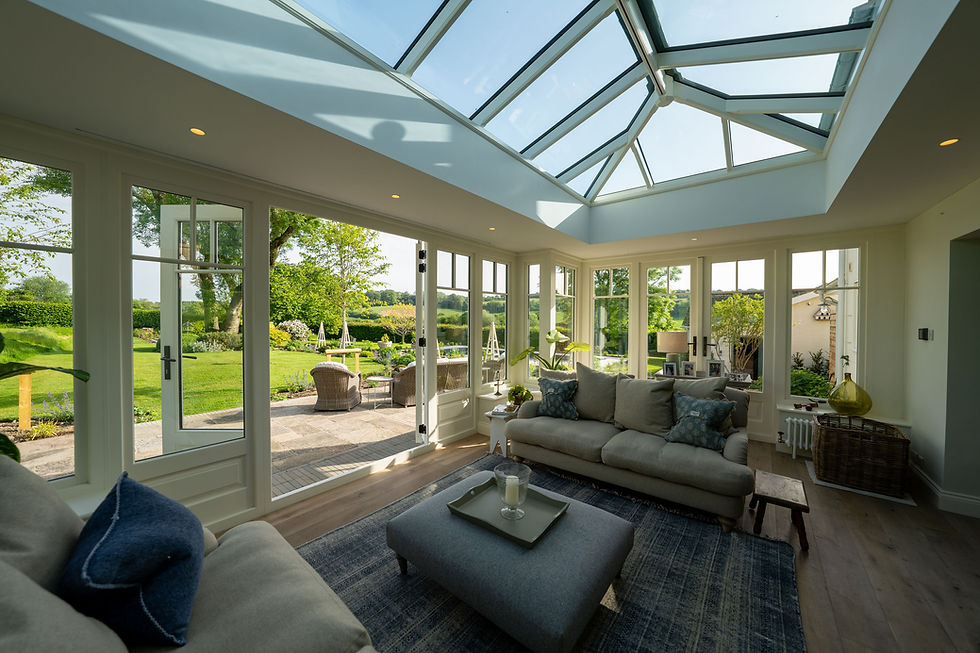
The roof decides it. An orangery's solid perimeter with a lantern over the centre brings light down into the middle of the room while keeping the sense of shelter. A brick extension has a pitched or flat roof with, at most, a couple of rooflights, which help but do not light a room from the middle or give the height. Where the extension sits on the north side of a house, an orangery's lantern is often the only way to get real daylight into it.
Comfort and thermal performance
A brick extension with cavity walls and a solid roof holds heat well and is easy to keep warm. A generation ago that was the deciding argument against an orangery. It no longer is. A modern orangery has an insulated roof deck, solid piers, and glazing with a low-emissivity coating and solar control, so it holds a steady temperature through the year. With underfloor heating beneath a stone or timber floor it performs like any other room in the house. What it needs, and a brick extension does not, is glazing specified for its orientation, which is why we treat glass as a design decision rather than a product choice.

Flexibility and use
An orangery suits sociable rooms: kitchens, dining rooms, garden lounges. The glazing, the lantern and the doors are made for spaces where people gather and look out. A brick extension suits private or practical rooms: utility rooms, studies, bedrooms, bathrooms, or a kitchen with a lot of wall for units. It also takes heavier fixtures and gives more solid wall for storage. If the brief is a second sitting room that opens to the garden, choose an orangery. If it is a downstairs bedroom with an en suite, choose brick.
Planning permission and regulations
Planning treats both the same. In England a single-storey rear extension of either kind can usually extend 3m (4m on a detached house) under permitted development, up to 4m high, with eaves under 3m within 2m of a boundary; conservation areas and listed buildings are more restricted. Building regulations apply to both, and an orangery open to the house does not qualify for the conservatory exemption. Our guide to planning permission for an orangery has the detail.
Cost: orangery or extension?
For the same floor area a quality orangery and a well-finished brick extension are closer in price than people expect, because both need the same base, the same structural work and the same finishes. A basic brick extension can come in below an orangery; one with rooflights, bifold doors and a high-end kitchen will not. The orangery spends its budget on glazing and joinery; the brick extension spends it on walls and roof. Fit-out is the same either way. Our orangery cost guide explains what drives the cost.
Materials and appearance
We build orangeries in painted hardwood, on brick or stone plinths matched to the house, and finish them with a deep moulded or plain fascia. They suit period homes and heritage settings because their detailing belongs to that architecture. A brick extension is brick or blockwork, rendered or faced to match, and its success depends on matching the existing bricks and the existing roof. On a house with strong period detailing an orangery is usually the easier match. On a plain modern house a brick extension, or a glass box extension, may sit better.
Common mistakes with either choice
The usual error is not thinking about the room through the seasons. Over-glazing a brick extension gives an overheated room with no wall space; under-glazing an orangery gives a dark room. Plan heating, lighting and layout at the start, and do not skimp on the base or the junction with the house.
Orangery vs extension questions, answered
Does an orangery add more value than an extension?
Both add value when they are built as proper rooms. An orangery adds character to the elevation and a room buyers notice, which helps on a period house. A brick extension adds conventional square footage, which helps on any house.
Which is quicker to build?
An orangery is usually quicker on site because much of the joinery and the lantern are made in the workshop, and there is less wet trade. A single-storey brick extension typically takes around three to four months on site. Both need the same groundworks, and both depend on planning and building control timescales before work starts, which is why the best time to build an extension is set months ahead.
Talk to our design team
If the brief is light, height and a room that opens to the garden, our traditional hardwood orangeries are the place to start. If it is a private, practical room, brick is the right answer, and we will say so. To weigh the two for your house, talk to our design team.


